Interview with their demons

Digging deep into your character for the real story.

What is it about inner demons? Every book on novel writing seems to stress them. The hero on his journey always packs them along. The Tin Woodsman wants a heart, the Cowardly Lion wants to be brave. Luke Skywalker has his ‘father.’ But why do we really need these interior problems deviling our protagonists?

You don’t. You can write a purely fantastical story without any angst or demons. It will be one-dimensional and a bit shallow, and will not be satisfying for certain readers, but it will entertain some. Think of The Da Vinci Code, for example. What inner demons did Robert Langdon have? The fact that women find him incredibly attractive? He doesn’t really have any demons and thus as a character is rather unsatisfying. He’s a trope, he serves a plot purpose and does that well, scampering here and there, one step ahead of the law and the church. But The DaVinci Code works as pure adrenaline plot.

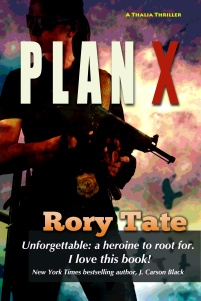
PLAN-X-ebook-finalSo it depends on the type of story you like to read, and/or write. If you want to make your story more than a plot but aren’t sure how to figure out what your main character is about, try interviewing them. When I was working on the story development for PLAN X, my new novel, I  knew the MC would be a woman, a cop, have an Army background, and have just lost her brother in Afghanistan, but that wasn’t enough. I couldn’t feel her. I couldn’t hear her. I couldn’t get inside her. I need to do all those things to feel confident that I can tell her story.

So I interviewed her one cold January day. I tried to do some reflective listening. Lots of story details have changed. She went from being a cocky FBI agent with some female swagger, to being an Army Reservist at the Bozeman Police Department. She didn’t have panic attacks yet, but she is angry and and alone.  This was where I started thinking about how she viewed the world, and what that meant for the story. Here’s how it went.

Q: Why did you decide to become a cop? 

A: Mostly by accident. My brother was in the Army then, so I joined up after college. Also because I was in ROTC in college. I knew I had to pay it back. Our parents weren’t, well, how to say this nicely — forthcoming in the tuition department. We both had to put ourselves through school. I chose the MPs and never looked back. I wanted the action.

Q: What else do you want?

A: I want to find out why my brother had to die. I want to find out what exactly he was doing in Afghanistan because I know he wasn’t just doing some reconnaissance mission like the Army says. He was a Green Beret. Or he used to be. I have a feeling he was working for the CIA but I  don’t know. Nobody will tell me anything.

Q: Does it really matter?

A: Hell, yes! This is my country, my army. I haven’t been in for seven years, since I was 26, but I have a strong allegiance to the service. I want to know if it failed him. I have a feeling, like I said, that it did, but I could be wrong. I need the facts. I have always been a gut-driven investigator but only because then I can get the facts to discredit my gut feeling.

Q: Could it just be that you’re grieving?

A: Fuck you! You don’t know what it’s like to lose the one person in the world who was solid, moral, a rock in your life. Taken away from you for reasons that no one will explain.

Q: But he was working in service to his country. Isn’t that enough?

A: I told you, no! It’s not enough. I need the facts.

Q: You sound angry.

A: Hell, yes, I’m angry. I’ve lost my brother. 

[they discuss the FBI. At this point she was an FBI agent.]

Q: Why do you think you’ve been getting less and less important assignments?

A: Because I’m not a kiss-ass. The FBI is full of ass-kissers.

Q: Do you even like men?

A: I like men. But respect is something a man has to earn. My brother spoiled me for that.

Q: He sounds like he was quite a guy.

A: [silence]

Q: Are you crying?

A: No. Leave me alone. He was my brother. My best friend. He could do anything. He made me feel like I could do anything, like he had my back. Always in my corner.

Q: You sound alone.

A: Isn’t everybody? But yes, I am more alone than anytime in my life. And it scares me. Will I always be alone? Will I say, hey, my life doesn’t matter and do something stupid that gets me killed? I can see it happening and it puts a chill on my spine. I’ve seen it before. Not the killed part, but the shot part, the hero thing.

Q: Do you want to be a hero?

A: I want justice. I want to do the right thing. I want to know the truth. I have a hard-on for the truth. Yeah, I know, even though I’m a woman I have a hard-on. It’s just a phrase. You have to get into male lingo if you want to be accepted in the FBI. It’s very macho.

Q: Do you consider yourself macho?

A: Not really. Macho is a posture that men adopt to make themselves feel better. It’s stupid and false. If you need to act macho you aren’t really that sure of your abilities.

Q: Are you sure of yours?

A: I can hit a bullseye at 50 yards with my right hand, and 100 yards with my left. My specialty is people. I get a vibe off people. I know, lots of people say that. But I can scan a crowd and almost instantly get a vibe if there’s a bad actor out there. Then I walk through the crowd and pick out the source of the vibe. I don’t always know what it is the person has done or is thinking about doing or is carrying, but I can pick him out. But mostly I just feel all the meanness in the world.

Q: That sounds like a burden.

A: Yeah, sometimes it is. It makes me realize how badly so many people are brought up, how little love there is in the world, how little kindness and good will.

PLAN X is out now on Amazon.

Shakespeare and Me

All writers owe a huge debt to William Shakespeare, whether they write in English or something else. He is, of course, just one of our storytelling forefathers but arguably the most important one. Prolific, diverse, and inventive, he truly was the most amazing playwright ever.

My new novel has a Shakespeare theme. I even wrote a few couplets (gulp.) The story involves a possibly fraudulent Renaissance or Elizabethan document, that may or may not be a Shakespeare play. The tantalizing prospect of an undiscovered play has teased Bardolators for centuries. Plus there is the fact that none of the surviving plays have ever been found in his own handwriting, only the printed folios. The only example we have of Shakespeare’s handwriting is his signature on his will.

So what if… something came to light? But strangely, no one wants it to come to light? This is the story in PLAN X. Coming out next week! To celebrate Shakespeare’s birthday in April, Goodreads made this awesome flow chart to help you read a play by the Bard. You will see ‘Two Noble Kinsmen’ in there, his last play. That’s the clue today, kind readers!

Remembering our soldiers

Like many Americans without a close relative in the military, I often think of Memorial Day as basically a three-day weekend, the start of summer and a good time to buy new sheets. But this year we marked ten solid years of war. Ten years. Remember when we sneered at the Russians for ten fruitless years in Afghanistan? Well, we have them beat. We started a second war in Iraq, for spurious reasons, that took seven years to unwind. Over 6700 soldiers have died in these two wars, not as many as our years in Vietnam by a long shot (because trauma care has improved so much.) The wounded continue to come home, without legs, with head injuries, with invisible scars to their psyches. Let’s all take a moment to remember the true cost of war. And thank those who have sacrificed so much, especially the wives, husbands, children, and parents and siblings of those who died for our freedoms.

This year feels different to me. I walked through France last summer with the widow of a Vietnam veteran, a Marine who was poisoned by Agent Orange and died a few years ago, in a way none of us should. Her story, told to me on a train as we contemplated our sunny days in wine country ahead, will always stay with me.

It’s been nine years since my father, an Army lieutenant in World War II who managed to miss the fighting by studying Japanese for the invasion that never came, passed away. He is buried with so so many others at Arlington National Cemetery, in the same space as his father, a World War I veteran who left his University post and went to war in his late ’30s, already a husband and father. The clan goes back a long ways in the Americas. No doubt there are Revolutionary War soldiers, and Civil War. The first known Stewart (my grandmother’s lineage) in the new world died here in 1640. Just thinking about the sacrifices and losses, made by generations and generations, so that I can today live a life free from fear, repression, and tyrants, makes me a little teary. I will never know them, nor they me, but we are connected.

This year I wrote about about war for the first time in a novel. My character is scarred emotionally by her brief Reserve tour in Iraq in 2009. Just before she was deployed word came that her brother had been killed in battle. These things, horrible things, happen to so many families and they shouldn’t be silent. Post-Traumatic Stress Disorder is a powerful, terrible thing, invisible yet a killer. If you know someone who needs help, please try to help them. Like the Vietnam vets who came back and were jeered at, these new veterans need empathy, to know that what they did (or had done to them) was what they were told to do and whatever it was, it’s over now. This is a scar we must live with, all of us, and help each other.

I sit here gazing at a peaceful river, under snow-capped mountains. The aspens are leafing out, a cheery green. I’ve cleaned the ashes from the fireplace and swept up the dead flies. And I am grateful to have such mundane chores today. Enjoy your chores! Have a wonderful weekend.

Cut to the Chase

You will have heard this writing nugget, that the start of a novel is the most important section. Of course you have. All readers know this instinctively. They read the first page of a long story, see if anything in those first few paragraphs grabs them. The trick for the writer then is to make that first page catchy, intriguing in some way, as well as jump-start the story to come.

But we don’t read novels just for plot. We want to care about who takes us by the hand and leads us on this journey. We want to trust and like this person, or at the very least be captivated by him. Good or bad, this narrator must squeeze hard on our hands right off the bat, yanking us out of our everyday lives into a rollicking tale. So as writers we must cut to the chase. No lengthy descriptions please. No general loveliness. We want to, no we must, get this party started with a bang, not a whimper.

In my new novel, PLAN X, written under my nom de plume Rory Tate, I knew how the story would begin, with an actual bang, an explosion in a lab plan-x-ebookon the Montana State University campus in Bozeman. With a call-out to the police, answered by my heroine, a young officer just back from a Reserve tour in Iraq. But how to start in the action — this is a thriller after all — and also impart something of who my protagonist is? Because thriller or not, the inside story is about this character, what she’s seen, how she copes, who helps her cope.

Over a few drafts the lead-up to the 911 call about the explosion shrank, and shrank some more. I had some scene-setting, then it was gone. I had some decision-making, and then it was gone. Finally, I had her in the car, driving to the scene. That allowed me to add specific details about who she is. So this is the first page of PLAN X, the final version, draft too-many-to-count:

The night air rushed in the patrol car’s window, cooling Cody Byrne’s cheeks as she hit the pedal hard, siren blaring. Streetlights made pools of white on the empty blocks. She screeched around the last corner, smiling. Her Army unit would love this. They didn’t call her Speedy for nothing. Then, she entered the chaos zone: fire trucks, ambulances, patrol cars, sheriff’s cars, campus cruisers. Red and blue lights bounced over the scene. Smoke and flame roiled from windows on the corner of the second floor of a university building. A lab had exploded, dispatch said. In the dark it looked like a movie set, lit from within by a magical force.

Her heart was thumping through her uniform as she pulled the car to the curb. She jogged past cruisers and ducked under yellow tape, trying to contain the exhilaration. Action: god, she loved it. The tingling in her fingers, the edge so close. The thrill would engulf her with its seductive ways, wrapping its arms around her, hugging the fear out of her. Would excitement kill her or cure her? Was there any other way to live but like this, in the middle of everything?

She took a breath. The smoke was pungent. Stay calm. Right now she wanted it, all of it. The good, the bad, the freaking drama of it all. But she had to stay cool. Firefighters pulled on hazmat suits. Smoke, nerves, shouts of Now! Bro! Let’s do it! She wanted a chemical suit, a vest, a tank. She was just a police officer but she wanted to go.

Much of police work is tedious, paperwork, routine stuff. But like Cody Byrne, cops live for action. Like all our brave first responders, this is their moment, when tragedy strikes and they are needed.

Flames leapt from the windows. A television news crew arrived and jumped into the fray with their cameras and mikes. The smell of the scene was different, chemical. Orange licked the eaves, acrid smoke blackened the brick above. The throng of firemen shouting orders came together, broke apart, grabbed tanks. EMTs huddled with their kits, waiting their turn.

Then a blast rocked them. The air sucked in, then exploded over them. The concussion was terrifying, a blow to the solar plexus like the crush of an avalanche. Firemen closest to the building fell like dominos, blown onto their backs. Cody staggered sideways, her ears ringing as she threw herself to the ground behind the fire truck’s big tire. The boom echoed off the building opposite, reverberating as it came to rest. Gasping, she stared at the pavement under her cheek. The bile rose in her throat and for a second she thought she might throw up.

She looked at the asphalt, seeing it close, its hard, black gravel, its tar.  This is where duty takes you. Into the thick of it, for better or worse. She believed in duty, she believed in action, and yet—

Someone grabbed her arm, pulling her upright, dusting her off. The juice pumped in her veins, telling her she’d made the wrong decision, that she should get the hell out of here. Her ears felt like they had cotton stuffed in them. She shook her head to clear them and stood her ground as she tucked her shoulder-length brown hair back into its tight bun and stuck her cap back on her head.

No running. Never.

The firefighters were on their feet again, with helmets and air packs and fire extinguishers, rushing toward the door. They disappeared into the smoke. Fools, all of them. Brave fools. Had they seen the bodies, the charred bits of the bone and flesh she’d seen? Her heart rose into her throat as a flashback to Iraq swept across her mind, another blast, another fire, the shiver of danger, of fear. No, not now. There was time enough for that in dreams.

And so it begins. Cody’s tale of the lab explosion and her inner story of wartime that has left her reeling. They happen side-by-side and the beginning the novel reflects that.

——-

PLAN X will be published on June 15. Sign up for the mailing list to keep up to date! Click here.

Using Twitter for Book Marketing

Last weekend I tried something new, a Re-Tweet Weekend. I asked my Twitter followers and Facebook friends, and LinkedIn Crime Fiction people, to send me their book links. Then Saturday and Sunday I re-tweeted them randomly and often.

Authors! Planning an RT extravaganza. Post your book tweet w/link and @LiseMcClendon and I will RT Saturday & Sunday #indie #books #ebooks

  1. @LiseMcClendon Really cool! Everyone should go over and look at this girl’s wallpaper. (Proud of myself–I know the lingo)

About twelve or fifteen authors played with me, from all my social networks. Not a huge response but that was probably good for the first go-round. (Luckily I didn’t have too many things going on!) The auto-scheduler on HootSuite was a big help. (My question though is how do you cancel an auto-scheduled tweet, or even find out if it’s scheduled and when?) The re-tweets continued until about Wednesday because the auto-scheduler figures out when is the best time for them.

Everybody got about five or six re-tweets over the weekend. The idea is have somebody else tweet your book links because tweeting about yourself is kind of … over. Really, people. Do your followers click on your links about your own books? And more importantly, do they buy books because you the author say they’re awesome?

Like most social marketing there’s a fine line between being excited about your book and just flogging the everloving hell out of it. The latest etiquette is not even re-tweet when somebody says something nice about your book (although I see that all the time.) Re-tweeting compliments is seen as just the same as complimenting yourself. Sadly I see this all as the advice my mother always gave me (and I totally hated): “Don’t break your arm patting yourself on the back.” Sigh.

Here was my advice to my own kids: “Don’t hide your light under a bushel basket.” (Totally old school, my mom and me.) The problem is with indie-published authors, they rarely have reviews to get the word out. Yes, sometimes you can use your Amazon and Nook reviews to promote your book, but those reviews, as we’ve heard, are not all that trusted. Independent reviewers like Publisher’s Weekly, Library Journal, BookList, and the like have a lot more credibility.

This is not to say you can’t tweet about your novels. You wouldn’t be on Twitter if you didn’t. But spreading the love around, re-tweeting other authors (I also re-tweeted people who hadn’t contacted me), and reading  blogs and news and tweeting links to those if they’re interesting, is more friendly. I see people with hundreds of thousands of followers on Twitter and they are posting links to their own website or books. More power to them, I guess. I’d love to know if that works for them. Does it work for you?

I’m planning on more Re-Tweet Weekends, hopefully one a month. Send me your book links in mid-May! Here’s my Twitter link: @LiseMcClendon

Spring fever, Montana-style

531765_10151539176234190_599042655_n

Black Otter Trail, Billings © Sherri Cornett

The day, like the day before, was blustery and cold. The snow continued to fall, lightly on the north wind, from morning through the evening. Although it didn’t stick on the ground long, it kept on coming.

This, my friends, is springtime in Montana. This is April.

There are no cherry blossoms, no daffodils, no leaves on the trees, no resurgence of life, no rebirth of green. Just more snow and cold.

But before you tell me to stop being so freaking negative because, dammit, spring will come eventually and it will be all the better because of winter being so clingy, well, let me tell you. I have Spring Fever.

At least I think I do. What exactly is Spring Fever? According to researchers, “spring fever may best be characterized as a combination of conflicting emotions, including a sense of comfort, warmth and renewal, amiability and lack of ambition.”

So not exactly like when we were in school and just wanted to be outside playing in the sunshine (although that too is a kind of spring fever.) But it is a release of winter blues, an uptick in energy, and — good news! — a reduction of appetite! (No wonder we all lose a little weight in the summer.) It made my friend Sherri and me brave 25 degree weather, a biting north wind, and an slick trail yesterday to get in our walk with our pal, Bentley, the blue heeler. No lack of ambition on Bentley’s part.

But Spring Fever isn’t all good moods and high energy. That reaction in some people makes others just get weird. ‘April is the cruelest month,’ according to the poet TS Eliot. If everyone around you feels all warm and friendly and you are lonely or angry, you might lash out. Depression, alcoholism, and suicide peaks in springtime. Could this be the reason there’ve been all the bombings and mass shootings the last 20 years in April? Do we need some kind of Spring Fever Alienation Intervention?

One seasonal researcher (yes there are such people) says: “That sense of flux – feeling better in certain dimensions, but not in other ways – may be the real definition of spring fever.” Of course as animals we react to our environment, waking up a bit when the sun shines more. It’s biological, not just psychological, they say.

So, even though winter is still choking the living daylights out of Montana and the northern states, even though Canada keeps sending the Alberta clipper our way, the calendar says April and that means the sun comes up early and, even behind snow clouds, makes most of us feel a little bit better. We anticipate warm days, gardening, swimming, fishing, and hiking.

When I lived in Jackson Hole I experienced for the first time a bad case of winter blues. Maybe it was the minus 20 degrees every morning for two or three weeks. Maybe it was the dreary days and long nights. (If possible I go away to a warm clime in late January, but it didn’t happen that year.) Many people experience the blues in winter as a true problem called Seasonal Affective Disorder, something like 5% of the population, mostly women.

For SAD sufferers, spring fever is a good thing. They act ”as giddy as a puppet on a string this time of year,” said a scientist in the New York Times. ”They are simply examples in the extreme form of changes that occur in all of us in spring.”

Change is inevitable, right behind taxes and springtime. Some people don’t adapt well, especially if the seasons change too fast. As for me, the change to a real Spring can’t come fast enough. Give me flowers. Give me warmth. Give me Spring. I promise to always have Spring Fever, every April.

Wired & War

My two new writing books: Wired for Story and The War of Art. Last week I explained how I justify the purchase of instructional books about writing by saying that I usually get one good idea from each. Well, I got more than one from Lisa Cron’s Wired for Story. It’s chock full of great advice on how to improve your manuscript, how readers are curious about what happens next (a survival skill from eons past), and the way the human brain uses story-telling that is deeply ingrained in our heads. The wonk in me loved the neurology and cave man stuff in this book; the writer in me loved her examples, the way knowing this information can make you a better writer.

Each chapter begins with a cognitive secret and a story secret. For instance, on the chapter titled “Digging Up Your Protagonist’s Inner Issue,” the cognitive secret is: “We see the world not as it is, but as we believe it to be.” Then, the story secret continues: “You must know precisely when, and why, your protagonist’s worldview was knocked out of alignment.” General, and specific. In “The Road from Setup to Payoff” one secret is “the brain hates randomness.” The other is “readers are always on the lookout for patterns.” This book reminds us what readers look for and tells us why so we can deliver.

The thing that really stuck with me on the first read (I will be rereading this book many times, I’m sure) is the difference between, and vital importance of, internal and external goals. Or you can call it a journey through the story. The external journey is the plot, what happens in the action of the story. The internal goal, what the protagonist is searching for, is more important than the plot.

Cron goes so far to say that the story is really the internal journey of the main character who must overcome her own emotional issues, problems, whatever, to reach an understanding, or at least equilibrium, at the end of the book. As she puts it: What does your protagonist have to confront in order to solve the problem you’ve so cleverly set up for her? That is the plot. The confrontations, the conflict. But it’s not the real story, that’s the internal stuff she works out along the way. Like Dorothy in the Wizard of Oz. She had to travel the Yellow Brick Road but in the end she finds out she had all she needed inside of her — her strengths, friendships, courage, brains. All the plot did was point out to her how capable she really was.

The other book I recently read is The War of Art by Steven Pressfield. He’s the author of The Legend of Bagger Vance and other novels. This book, called “a kick in the ass” by Esquire, is more inspirational in nature. It tells you to get on with writing that book and stop being afraid of what others think. The subtitle is Break Through the Blocks and Win Your Inner Creative Battles. I don’t think I have writer’s block, and I’m pretty tough in the hide department but I still found plenty to inspire me here. Every so often you need a book like this to remind you that what you do is important. Don’t poo-poo your little novel. It is a piece of your heart. Invest in it, work on it, make it sparkle. Then let it go into the world. So what if it doesn’t set the world on fire? It is awesome nonetheless. Nobody read Moby Dick!

The Master of Bookish Arts Degree, from You U.

2013-03-11_15.24.46Maybe because I don’t have an MFA, or a degree in English Lit, let alone one in Creative Writing, my self-taught approach to writing has included a huge library of books on the subject, from basics like Brenda Ueland’s If You Want to Write and inspirational tomes like Anne Lamott’s Bird by Bird, to nuts and bolts guides to genre fiction like Cause of Death and Scene of the Crime. It’s been my experience that I usually get one good idea (sometimes more but rarely less) from every writing book I read. Yes, I could go to a workshop and maybe learn a lot more. I do that too sometimes. But for ten or twenty bucks, one good idea is a heckuva deal.

Sometimes I have a dry spell. I’m not interested in reading about writing, just doing the job. Then along will come a little magic pill between two covers and I dive in like Alice in Wonderland, wondering if I’ll get bigger or smaller. The idea the book conjures may be tiny, or it may just look insignificant. You never know. Here’s an example. I am re-reading James Wood’s excellent book, How Fiction Works. He discusses free indirect style and the development of the modern novelistic model given to us so completely by Flaubert. Lots of great classic examples, and contemporary ones, to explain what makes fiction what it is, an engrossing, intimate experience seen through the eyes and minds of realistic characters.

Fine, you say, but how to do it? There is no one way to write a better book. You can only write the book that’s yours. Here’s how it works for me: As I read along an idea pops into my head, relating to the manuscript I’m editing. I’m on about draft five and it’s getting down to the wire. But suddenly I have an idea for a nickname for the main character, one that her Army buddies give her, that encapsulates both her strengths and her weakness. Bingo! (That’s not the nickname.)

Where does this deliciousness come from, especially when I’m reading literary criticism? The writing of a novel is so deeply ingrained in our subconscious that when reading about other books, other styles, the ways that one word can make a difference in a reader’s perception of a character, things just happen. Like those magic pills, they pop up and give themselves to you. Whether you take them or not is up to you.

You don’t have to be reading a writing book. You can be pulling weeds, washing dishes, eating breakfast, or any old thing. But reading about writing focuses you on the work at hand, that novel that needs tweaking, the structure that could be propped up, the pacing that ought to be ratcheted up, the dross that can be slashed.

I’ve been at this game awhile. (Thirty years!) But I still buy writing books. Sometimes I just skim to find things that I relate to. Other times I gulp them down whole and enjoy every bite. The thing about this writing gig? It is one long education, start to, well, if you finish before you croak, then start to finish. And that’s the beauty of it. Keep learning.

Next week I’ll write about two new books on writing that I recently discovered: Wired for Story by Lisa Cron and The War of Art by Steven Pressfield. Thanks to Kate Flora for her wonderful list of writing books suggested by writers over at the Thalia Press Authors Co-op blog.